


Understanding the Middle Part Foundation
The middle part represents one of the most versatile and timeless hairstyling approaches that transcends seasonal trends and fashion epochs. This quintessential parting technique creates symmetrical balance while accentuating facial architecture in ways that few other styling methods can achieve. Whether you're channeling vintage Hollywood glamour or embracing contemporary minimalist aesthetics, mastering the middle part opens doors to countless styling possibilities.
Creating the perfect middle part requires more than simply dragging a comb down the center of your scalp. The technique demands precision, understanding of your unique hair texture, and knowledge of complementary styling methods that enhance rather than detract from your natural features.
Why Middle Parts Remain Fashion-Forward
Fashion-conscious individuals consistently gravitate toward middle parts because of their inherent sophistication and adaptability. This parting style effortlessly transitions from casual daywear to elegant evening ensembles, making it an invaluable technique for women who value versatility in their beauty repertoire.
The middle part's enduring popularity stems from its ability to create visual elongation while maintaining facial symmetry. Unlike side parts that can sometimes appear dated or overly structured, the center part offers a modern, effortless appearance that complements various hair lengths and textures.

Step 1: Preparing Your Hair Canvas
Exceptional middle part styling begins with meticulous hair preparation that sets the foundation for long-lasting results. Start with freshly cleansed hair using products specifically formulated for your hair type, whether fine, thick, curly, or chemically treated. Clean hair provides better grip for styling products and ensures your part maintains its crisp definition throughout the day.
Apply a volumizing mousse or texturizing spray to damp hair, focusing on the roots where lift and support are most crucial. These products create the necessary scaffolding that prevents your middle part from appearing flat or lifeless. For fine hair, concentrate product application at the crown area to maximize volume without weighing down the lengths.
"The secret to a professional-looking middle part lies in the preparation phase – it's where the magic truly begins, not in the final styling moments."
Essential Tools and Products
Assembling the right arsenal of styling implements ensures consistent, salon-quality results. A rat-tail comb with fine teeth provides the precision necessary for creating razor-sharp parts, while a wide-tooth comb helps detangle without disrupting your hair's natural texture patterns.
Heat protectant sprays safeguard your strands from thermal damage while adding subtle shine and smoothness. Choose lightweight formulations that won't create buildup or compromise your style's longevity.
Step 2: Creating the Perfect Central Line
The anatomical center of your scalp serves as the starting reference point, though the "perfect" middle part might require slight adjustments based on your facial structure and natural growth patterns. Begin by identifying the center point of your forehead, typically aligned with the bridge of your nose, then extend an imaginary line toward your crown.
Using your rat-tail comb, create a precise line from your front hairline to the crown area, applying gentle pressure to ensure the part penetrates through all hair layers. The line should feel natural and comfortable – if you experience pulling or tension, slightly adjust the placement until you find your hair's preferred parting zone.
Some individuals possess natural cowlicks or growth patterns that make a perfectly centered part challenging. In these cases, creating a slightly off-center part that appears centered from the front view often produces more flattering and manageable results.
Working with Natural Growth Patterns
Hair growth patterns vary significantly between individuals, and acknowledging these natural tendencies prevents frustration and creates more sustainable styling routines. Observe how your hair naturally wants to fall when wet and work with, rather than against, these inherent characteristics.
For stubborn areas that resist parting, apply a small amount of pomade or styling paste to damp hair before creating your part. These products provide additional hold and help train resistant sections over time.
Step 3: Strategic Blow-Drying Techniques
Blow-drying methodology significantly impacts your middle part's final appearance and longevity. Begin with your hair approximately 80% dry from air-drying or rough blow-drying with a diffuser attachment. This preliminary drying phase prevents excessive heat exposure while maintaining your hair's natural moisture balance.
Section your hair into manageable portions, typically dividing each side into three horizontal layers: bottom, middle, and crown sections. Start blow-drying the bottom sections using a round brush, directing airflow from roots to ends while maintaining tension that creates smoothness without excessive straightening.
| Hair Texture | Brush Type | Heat Setting | Technique Focus |
|---|---|---|---|
| Fine/Thin | Small round brush | Medium heat | Root lift and volume |
| Medium/Normal | Medium round brush | Medium-high heat | Smoothness and shine |
| Thick/Coarse | Large round brush | High heat | Straightening and control |
| Curly/Textured | Paddle brush | Low-medium heat | Elongation and definition |
Directional Blow-Drying for Enhanced Volume
The direction of your blow-drying motions dramatically influences your middle part's final volume and shape. Direct airflow away from your scalp at the part line, creating lift and preventing the flat appearance that often plagues center-parted styles.
Alternate between lifting sections upward and smoothing them down, which creates natural-looking volume that doesn't appear artificially teased or over-styled. This technique produces the effortless, lived-in texture that characterizes professionally styled middle parts.
Step 4: Styling and Shaping Techniques
Once your hair achieves the desired texture and volume through blow-drying, the styling phase allows for creative expression while maintaining your middle part's structural integrity. This stage involves refining your hair's shape, adding movement, and creating the specific aesthetic you're targeting.
For sleek, sophisticated looks, use a flat iron on small sections, maintaining consistent temperature and speed to avoid heat damage or uneven results. Begin each pass close to the roots, following your established part line to reinforce its definition while creating smooth, glossy lengths.
Alternatively, for more relaxed, textured finishes, employ curling techniques using either hot tools or heat-free methods like braiding damp hair or using foam rollers. These approaches add dimension and movement that prevents middle parts from appearing too severe or monotonous.
Creating Movement and Texture
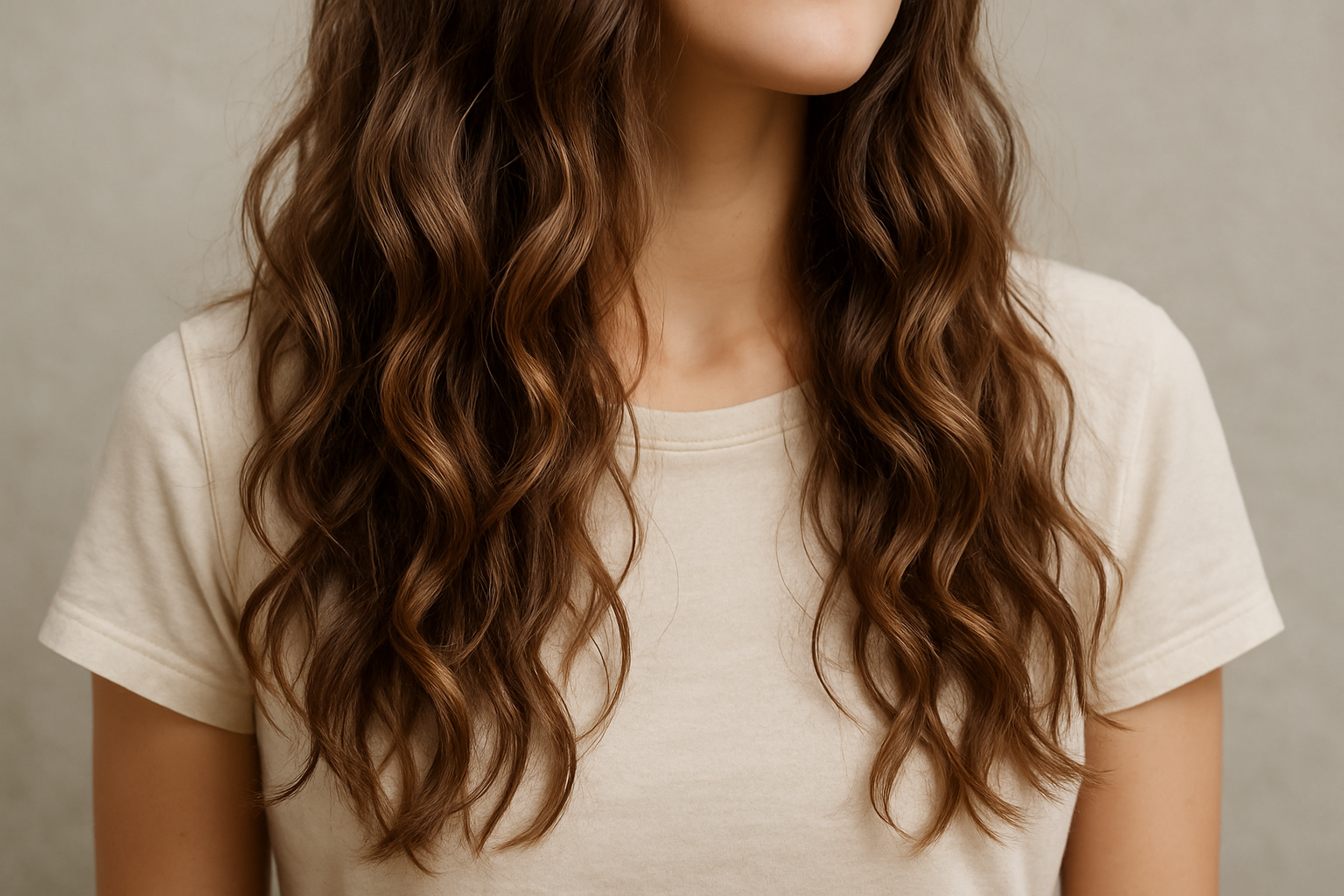
Movement prevents middle parts from looking rigid or overly controlled, which can appear unflattering in certain lighting conditions or from specific angles. Incorporate subtle waves or bends throughout your hair's length, varying the curl direction to achieve organic-looking texture.
- Alternate curl directions between sections for natural-looking wave patterns
- Focus curling efforts on mid-lengths and ends rather than roots to maintain part definition
- Use varying barrel sizes to create dimensional, multi-textured results
- Allow curls to cool completely before manipulating or brushing through
Face-Framing Techniques
Strategic face-framing elements enhance middle parts by creating softness around facial features while maintaining the style's overall symmetry. Subtle layering around the front hairline prevents harsh lines that can appear unflattering, particularly on individuals with angular facial structures.
Consider incorporating gentle curves or soft bends in the front sections that frame your face. These elements should appear intentional yet effortless, complementing rather than competing with your middle part's clean lines.
Step 5: Finishing Touches and Long-Lasting Hold
The final styling phase determines your middle part's longevity and overall polish, transforming good technique into exceptional results that withstand environmental factors and daily activities. Product selection during this stage requires careful consideration of your hair type, desired finish, and lifestyle demands.
Light-hold hairsprays provide flexibility while maintaining style integrity, making them ideal for most middle part applications. Apply these products from arm's length, using sweeping motions that distribute product evenly without creating concentrated areas that might appear stiff or unnatural.
For additional shine and smoothness, consider applying a small amount of hair oil or serum to mid-lengths and ends. These products enhance your hair's natural luster while providing protection against humidity and environmental stressors that can cause frizz or loss of style definition.
Maintenance Throughout the Day
Maintaining your middle part's pristine appearance requires minimal touch-ups when executed correctly from the beginning. Carry a small comb for quick part adjustments, particularly after wearing hats, scarves, or other accessories that might disturb your styling.
Environmental factors like wind, humidity, or temperature changes can affect your style's longevity. Understanding how your hair responds to these conditions allows you to make proactive adjustments that preserve your look throughout extended wear periods.
Common Mistakes and Professional Solutions
Even experienced stylists encounter challenges when perfecting middle part techniques, and recognizing common pitfalls prevents frustrating results and wasted effort. Understanding these frequent mistakes empowers you to troubleshoot issues and achieve consistently professional results.
Over-processing hair with excessive heat or aggressive brushing often results in flatness, frizz, or lack of natural movement. These issues typically stem from impatience during the styling process or using inappropriate tools for specific hair types.
Addressing Stubborn Cowlicks
Cowlicks represent natural growth pattern disruptions that can interfere with clean middle part creation. Rather than fighting these patterns, work strategically around them by adjusting your part placement slightly or using targeted styling techniques that minimize their visual impact.
- Identify cowlick locations when hair is completely wet and natural
- Apply strong-hold gel or pomade specifically to problematic areas
- Use directional blow-drying to train hair away from natural growth patterns
- Consider slight part adjustments that work with rather than against natural tendencies


